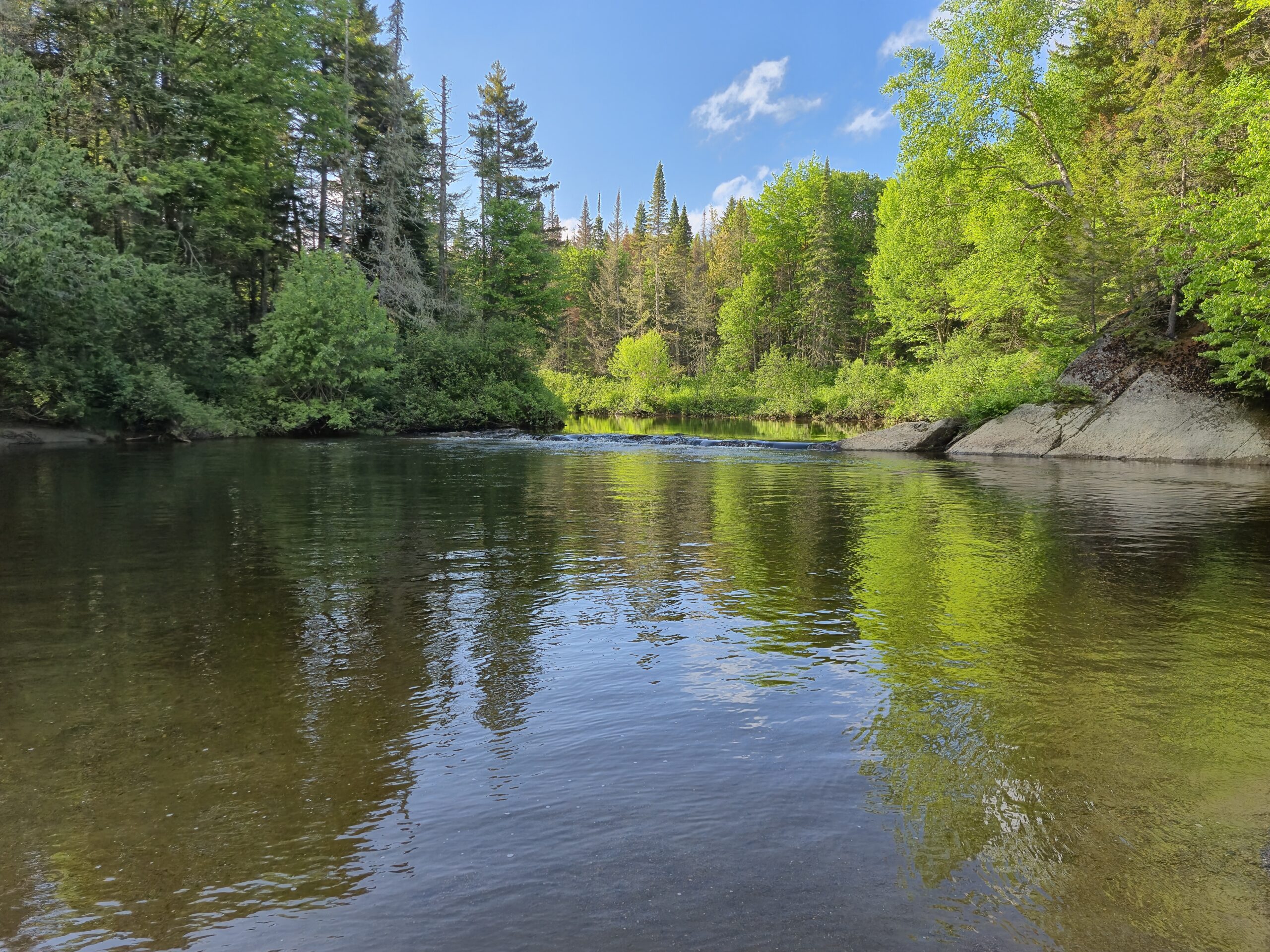
A still summer evening along the Dead Diamond River
Written by Tyler Hodges, a PhD student at the University of Vermont
A central goal of climate-adaptive silviculture is the maintenance of forest function and biodiversity in the face of ongoing and future change through deliberate modifications of forest age, structure, and composition. In eastern North America, the creation of forest bird habitats using silvicultural techniques has long been an emphasis in management plans. Much of this emphasis can be attributed to long-term declines of species associated with early-successional and young forests, including gamebirds like the Ruffed Grouse and American Woodcock and imperiled songbirds like the Golden-winged Warbler, a species currently being considered for listing under the Endangered Species Act. However, recent research has revealed more widespread declines in bird populations across the entire eastern forest biome, stressing the potential importance of habitat management in the conservation of these species. The responses of most eastern forest birds to traditional silvicultural techniques have been extensively catalogued in the scientific literature. Although climate-adaptive silviculture is often grounded in traditional and ecological techniques, the highly-localized and context-specific nature in which it is applied—i.e., where techniques are selected to mitigate site-specific forest vulnerabilities—creates a need for region-specific studies that determine whether it is effectively fulfilling the habitat requirements of focal bird species. This is especially true given the seemingly ever-increasing demands that we place on our forests, whether that be for the supply of timber, the conservation of wildlife, the storage of carbon, or the mitigation of other climate impacts. Having a firm understanding of the tradeoffs and synergies between these objectives that are induced by adaptation strategies will enable practitioners to fine-tune land management approaches to help satisfy the diverse needs of humans, wildlife, and the broader ecosystems they are a part of.
For my dissertation research, I am attempting to address these knowledge gaps by leveraging data produced through an extensive avian monitoring project currently underway at several adaptation experiments spread across the northern hardwood and spruce-fir forests of New England. These projects include the Second College Grant ASCC site, as well as numerous research-grade adaptation demonstrations inspired by that work. By utilizing a combination of standardized point counts and passive acoustic monitoring (PAM), we are attempting to catalogue the responses of the avian community to a gradient of forest adaptation approaches that were designed to mitigate a host of forest vulnerabilities, ranging from the encroachment of emerald ash borer (EAB) to increased extreme precipitation events and the contemporary homogeneity of forest conditions due to historical land use.
Hidden deep in the mixedwoods of northern New Hampshire and embedded in a landscape largely dominated by industrial forestry operations, the Second College Grant is a sprawling, 27,000-acre township owned and managed by Dartmouth. Granted to the college in 1807 for the purpose of funding its growth and operations, the property has a long history of forest management and ecological research. Adding to its rich history, the Grant became home to an ASCC installation in 2016, making it the second-oldest experimental site in the network. Most of the Grant is dominated by northern hardwood forests consisting of sugar maple, yellow birch, and American beech, including the ASCC blocks, but lowland and montane spruce-fir stands are also located on the property.
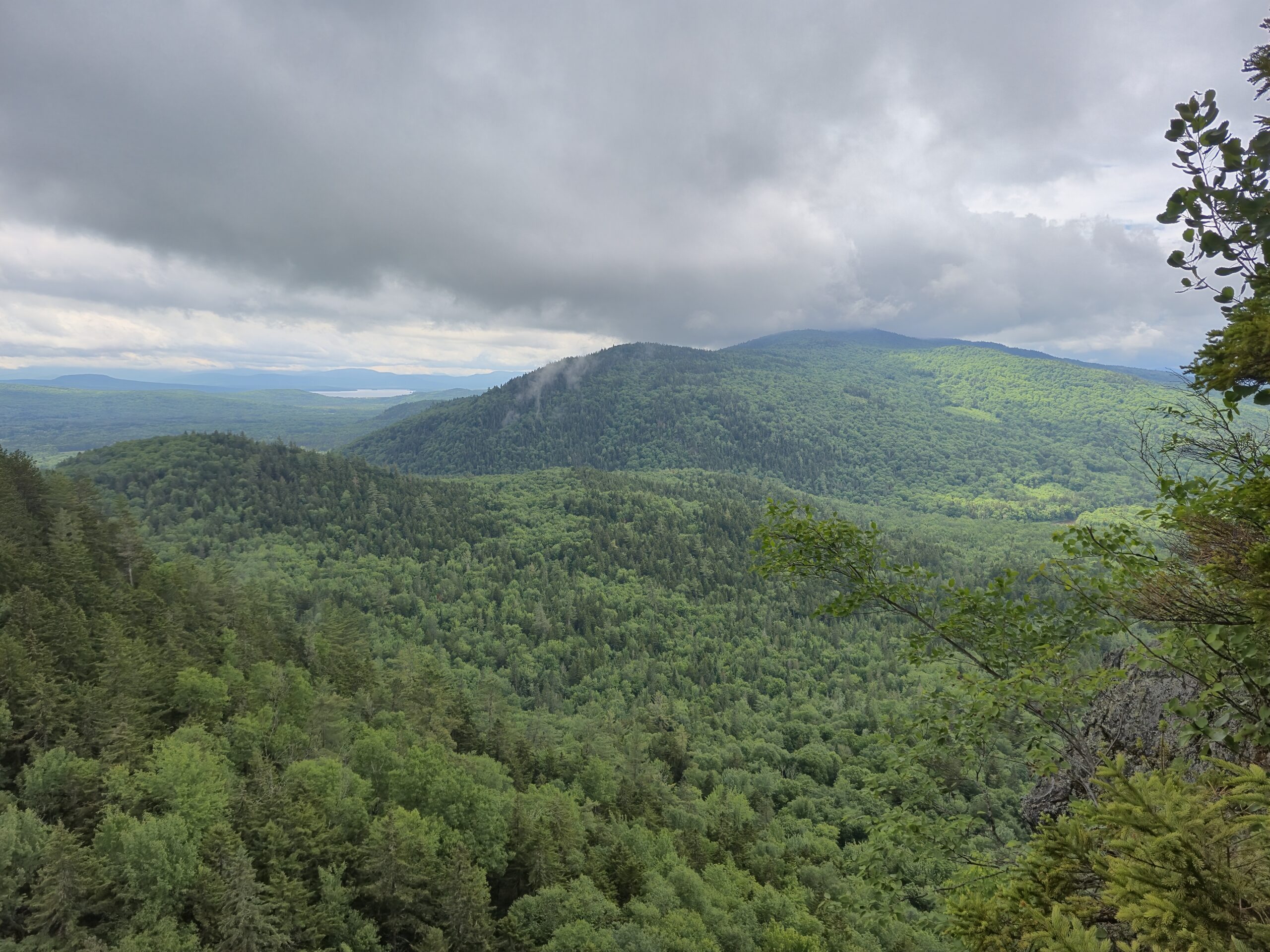
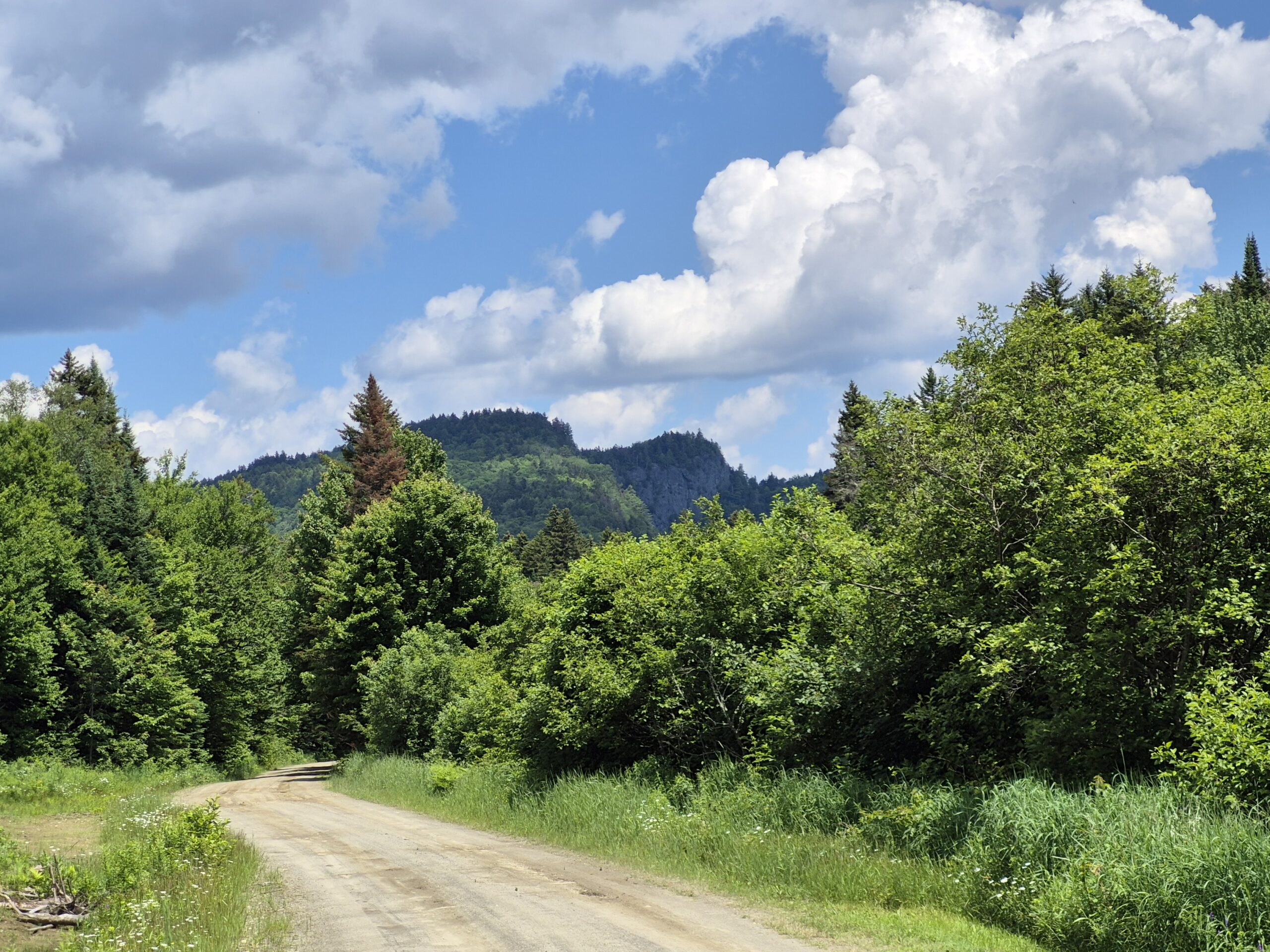
A view of the southern reaches of the Second College Grant from Diamond PeaksA view of Linda Ledge from Swift Diamond Road in the Second College Grant
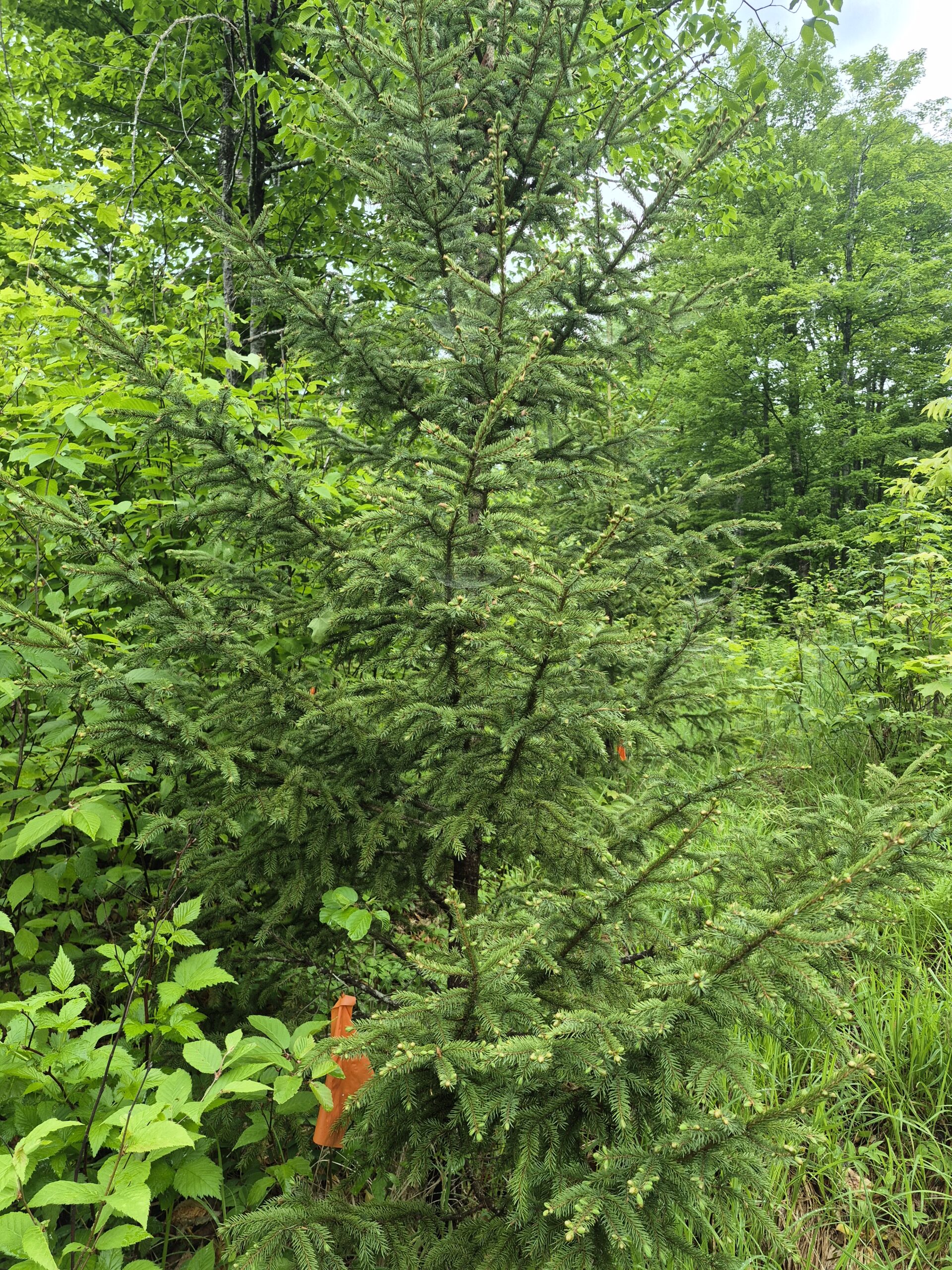
In accordance with ASCC protocols, a team of managers and scientists met in 2016 to identify the climate vulnerabilities of the forests at the Grant and design treatments to address them using the Resistance-Resilience-Transition framework. The result of that workshop is the 400-acre experiment present today. Across those 400 acres, each of the 25-acre resistance, resilience, and transition treatments, along with paired untreated controls, are replicated four times. The resistance treatments consist of single-tree selection, a widely-used tactic in northern hardwood forests to encourage the regeneration of shade-tolerant species like sugar maple. The resilience treatments take it one step further by combining single-tree and group selection, with groups of 0.1 and 0.25 acres distributed across 20% of each stand and permanent reserves of the same size located across another 20% of each stand. Finally, the transition treatments adopt a variable density thinning/continuous-cover irregular shelterwood approach, with gaps of 0.25-1.0 acres located across 20% of the stand, reserves of 0.1-0.25 acres located across another 10-20% of the stand, and the remaining matrix thinned to 70-80ft.2/acre. An additional component of the transition prescription was the planting of potentially future-adapted tree seedlings in the gaps, including species with more southerly distributions like American chestnut, black birch, and bitternut hickory. The idea here is to facilitate forest adaptation by speeding up northward migration (or skipping it entirely!) of species and genotypes that are functionally redundant with those already present on the property but projected to fare poorly under future conditions and threats. As it is beyond the scope of this particular blog, I refer readers here and here to learn more about the ASCC experimental design and the treatments at the Second College Grant.
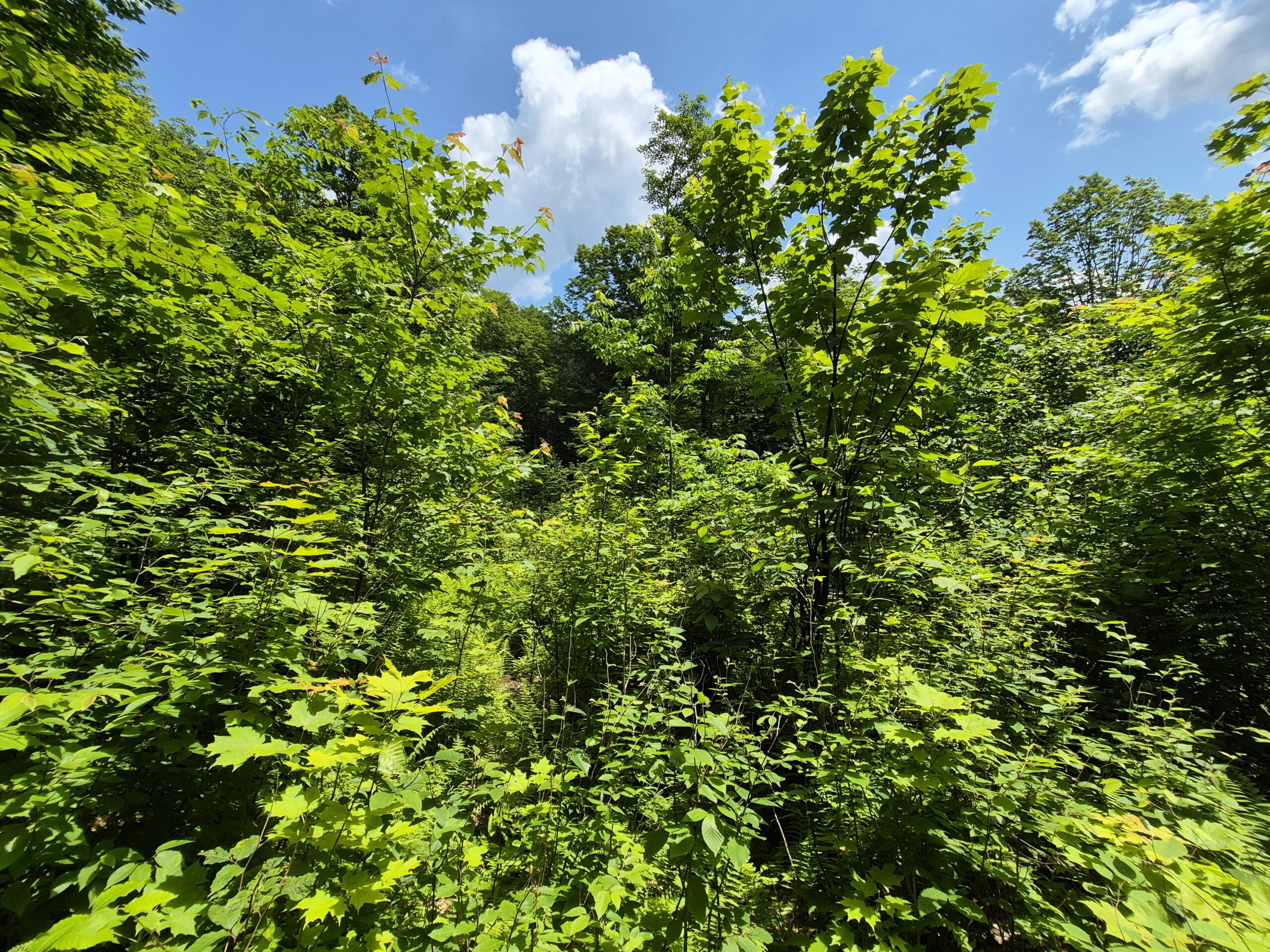
A planted red spruce in a transition treatmentA 1-acre gap in a transition unit nine years post-harvest
Avian monitoring at the installation began before the commencement of harvesting in the spring of 2017 and has continued on-and-off to this date. Dave King (USFS, retired) and Dave Lutz (formerly Dartmouth, now Colby Sawyer College) spearheaded much of this initial monitoring. In total, 64 avian survey plots (four/stand) are spread throughout the ASCC experiment, with plots distributed to capture as much of the post-treatment, sub-stand-level structural variability as possible. Using a combination of 12-minute standardized point counts and passive acoustic monitoring with autonomous recording units (ARUs), Dave King and his students surveyed the points during June—the height of the breeding season in northern New England—in 2017, 2020, 2023, 2024, and 2025.
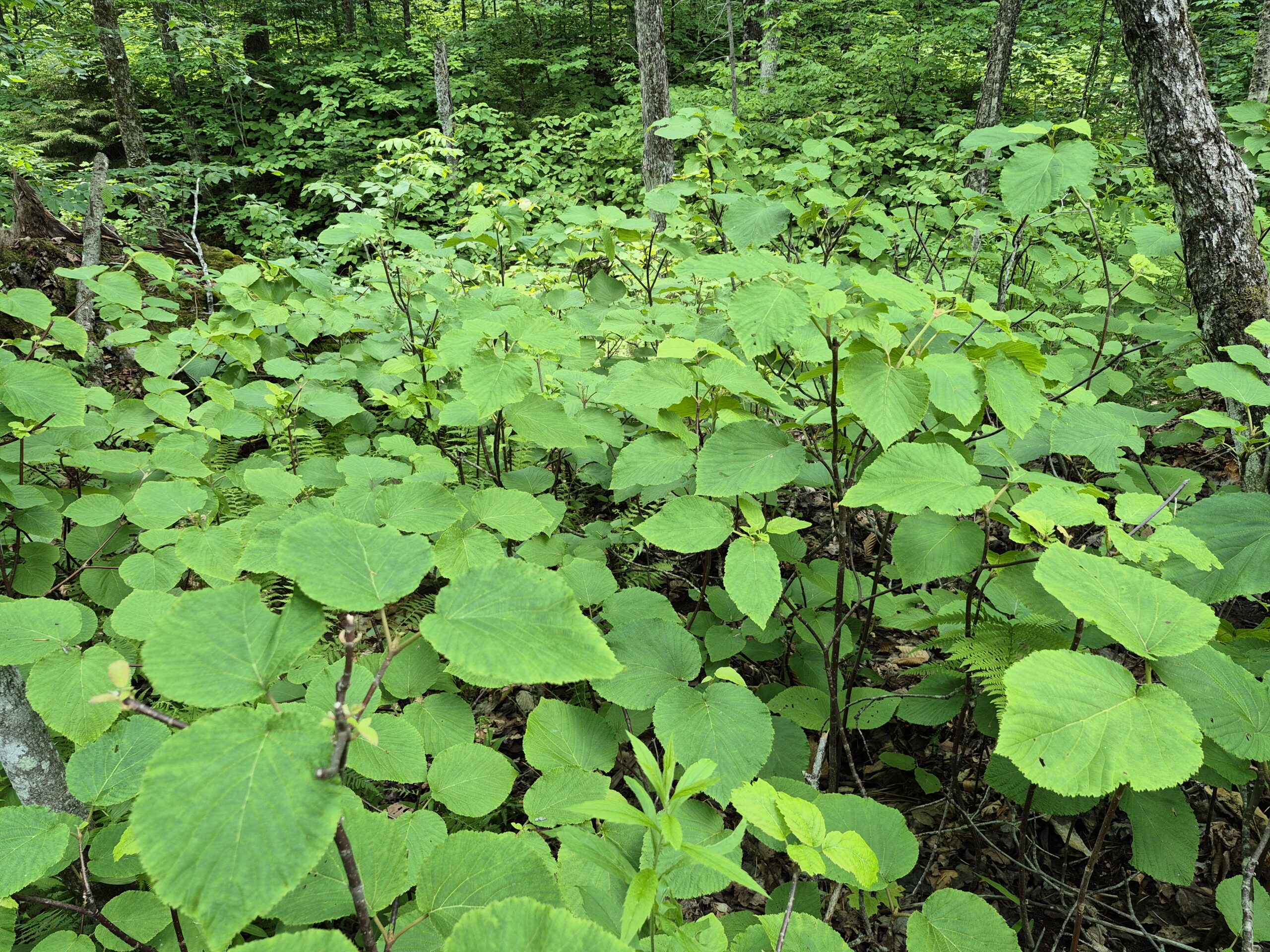
Those initial years of PAM and point-count surveys yielded a number of interesting, albeit not unexpected, insights into how avian communities are responding in the short term to northern hardwood adaptation approaches. Unsurprisingly, the gaps in the transition and resilience treatments soon became populated with birds that nest in young forest such as Chestnut-sided Warblers, Mourning Warblers, and Common Yellowthroats, while Black-throated Green Warblers, a species that commonly nests in mature mixedwoods, occurred at the highest rates in unharvested controls, although presence remained high across the treatment gradient. Black-throated Blue Warblers, an extensively-studied species often used as a model organism for other Neotropical migratory songbirds, was found to have high occupancy across treatments, but detections were most numerous in resistance treatments where hobblebush and striped maple showed strong responses to the single-tree harvesting. Hobblebush, as revealed through long-term studies at the nearby Hubbard Brook Experimental Forest, is a preferred nesting substrate for Black-throated Blues and an indicator of nesting habitat quality in northern New Hampshire, so these findings are again as expected. Importantly, these preliminary analyses indicate that the most drastic treatments—resilience and transition—are still able to maintain the presence of mature-forest associates like the Black-throated Green Warbler and Ovenbird while creating new habitat for young forest associates that is altogether lacking in the control and resistance treatments. These results suggest that, beyond maintaining populations of forest birds already present at a site before harvest, northern hardwood adaptation approaches may actually be a valuable tool for creating or improving habitat conditions for a larger suite of forest bird species, including those that are management priorities in the east.
Dense hobblebush regeneration in one of the treatments nine years post-harvest, a favorite nesting substrate of Black-throated Blues
Of course, as succession at the ASCC installation continues and additional harvest entries are made, the avian community will change in accordance with forest structure and composition. Avian monitoring therefore must also continue to capture these longer-term changes in community structure. That’s why this past spring, a UVM team comprised of myself, Dr. Allan Strong, fellow PhD student Vegas Rockefeller, and undergraduate technician Gavin Young, returned to the Grant to complete point counts on the ninth year following treatment. Beyond adding more data to the timeseries, this also served as a great opportunity for me to get acquainted with the Grant—one of the primary study sites for my dissertation—as well as its avifauna.
Across several chaotic mornings in June, our team of intrepid avian ecologists weathered swarms of mosquitoes, pre-dawn scrambles up mountain slopes through wet hobblebush thickets, skid trails-turned-bottomless-muck pits, and the occasional moose encounter to complete the three replicates of surveys. Weather for the first half of June was uncharacteristically cooperative and we completed the first one-and-a-half replicates of surveys at the Grant and our other study sites with ease. However, the latter half of the month proved to be wet and windy, and after several frustrating mornings where we could only squeeze in a meager number of surveys during lulls in the weather, we were left with only two days to finish the entire third replicate of surveys at the Grant. To make matters worse, our team of four had dwindled to a team of two, and Gavin had been fighting a cold for days. Still, we prevailed and completed all 64 of the remaining surveys in those last two days.
Anecdotally, what we saw in the field at year nine appeared consistent with the results of Dave King’s preliminary analyses: species that nest in young and early-successional forest seemed most abundant in resilience and transition treatments, while most mature-forest associates were present across the management gradient. It will be interesting to see if these anecdotal observations bear out under the scrutiny of a proper statistical analysis, and even moreso when these data are added to the existing timeseries at the Grant or combined with avian surveys at other adaptation experiments, both in New England and elsewhere. Besides point counts, there was another component to our avian monitoring at the Grant this year which I have not yet mentioned, one that will hopefully allow us to assess avian use of adaptive silviculture treatments like never before: a pilot acoustic localization grid.
Although standardized point counts and PAM surveys are the bread-and-butter techniques used in most avian monitoring protocols focused on producing estimates of occupancy or abundance, they are not without their shortcomings. Amongst these is that, except in a very coarse sense, they don’t yield spatial data on where a bird is singing from or what habitat components they are using. Thus, in cases where a silvicultural treatment is designed to create heterogenous conditions within a stand, as in variable density thinning and variable retention harvests, it can be difficult to determine with a singular ARU or traditional point count where exactly a bird is singing from, much less what treatment components (i.e., skips, gaps, and thinned matrix) they are actually using and responding to. Was that singing Black-throated Blue Warbler using the gap 25 meters away, or the thinned matrix beyond? Of course, such a question could be answered with traditional radio- or GPS-based telemetry or modern remote telemetry arrays, but when tracking multiple individuals across several species, the cost, logistics, and time in the field can become prohibitive, and that’s without mentioning the specialized training and potentially invasive techniques that are needed to capture and tag the birds. This is where acoustic localization shines.
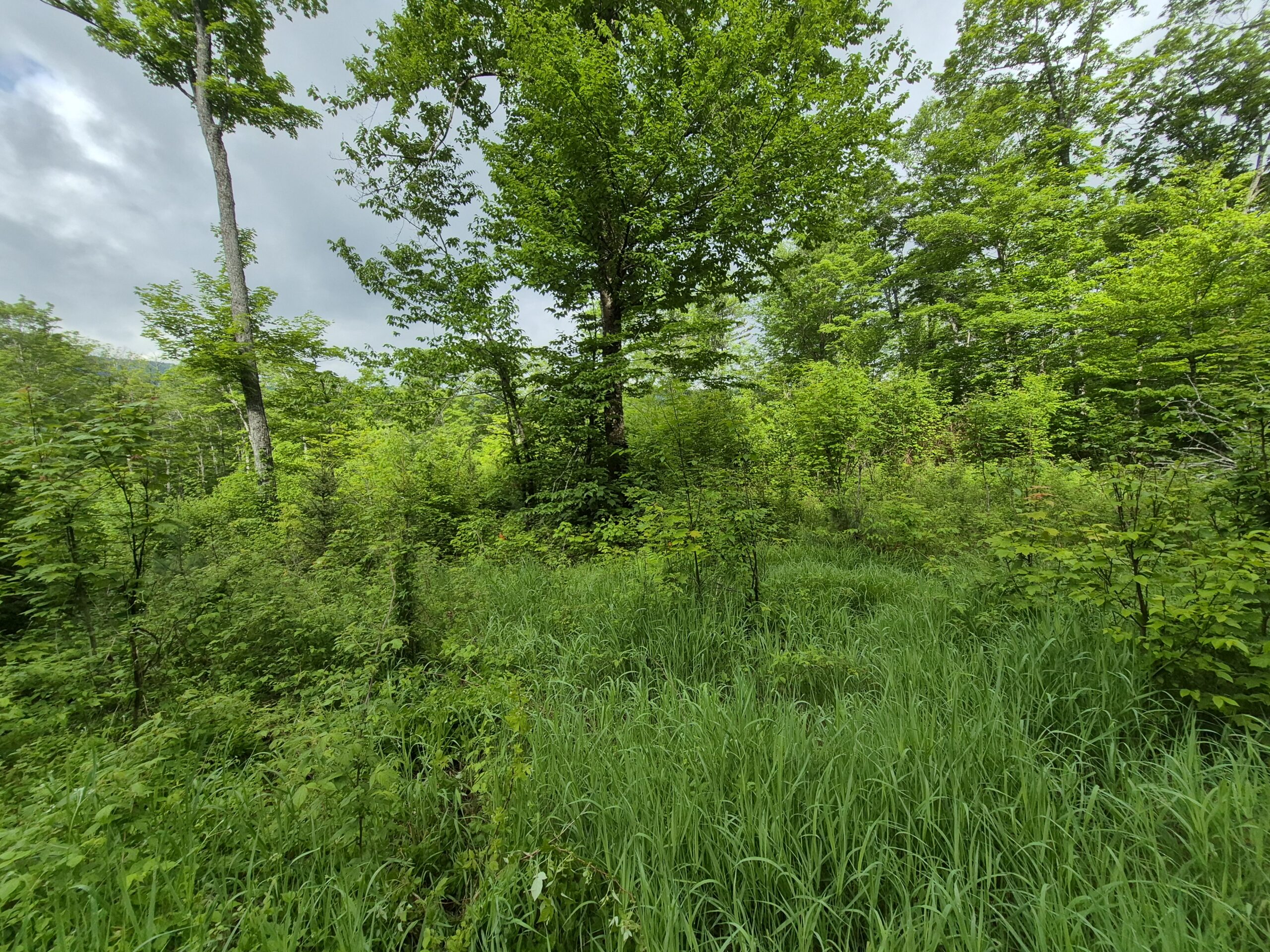
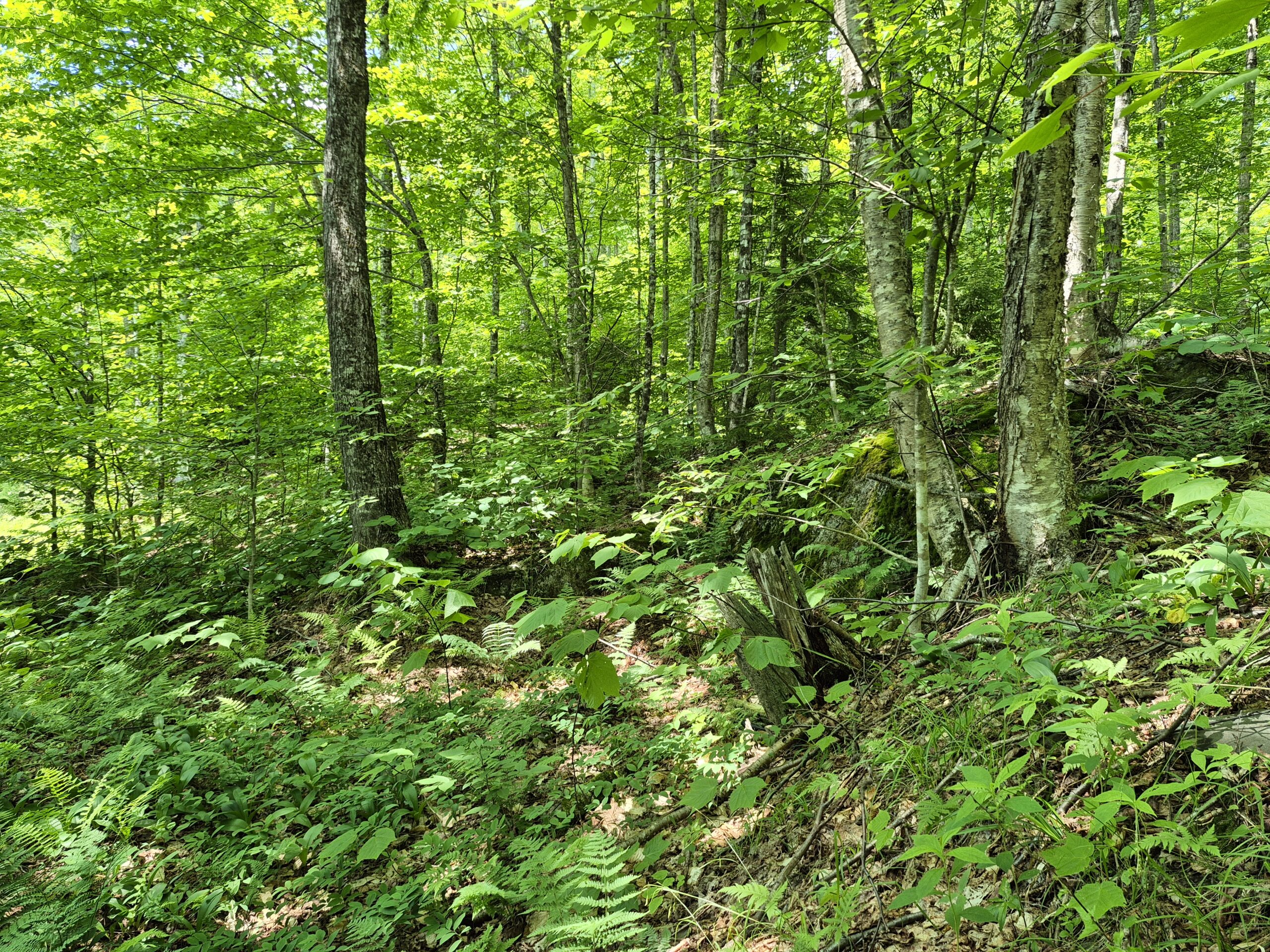
A 0.25-acre gap in a transition treatment at year nine post-harvestThe thinned matrix in a transition treatment at nine years post-harvest
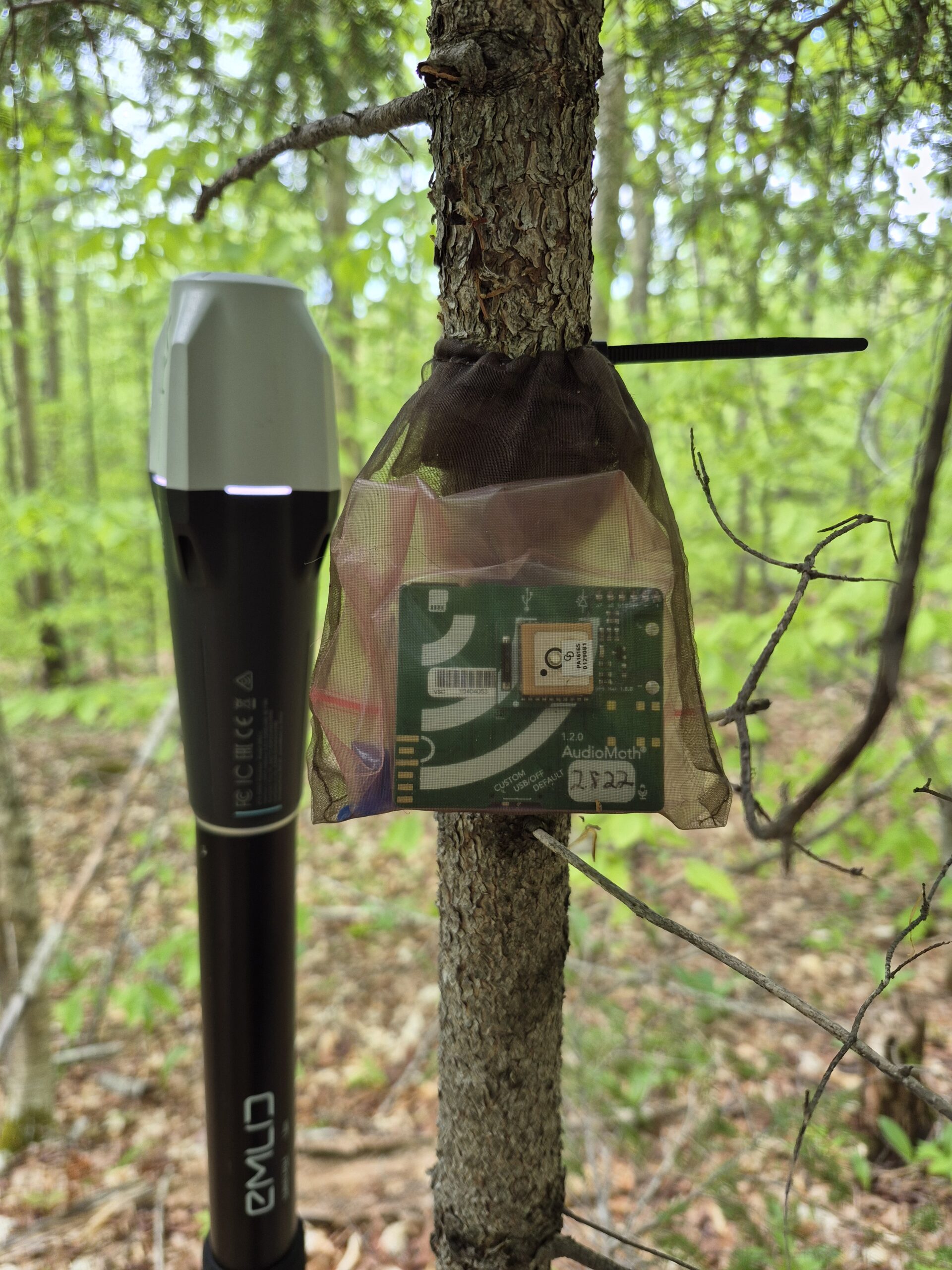
Essentially a modern take on telemetry that relies on ARUs instead of radio or GPS tags, acoustic localization allows researchers to obtain fine-scale spatial data on their species of interest by triangulating individual bouts of sound. Without getting too far into the technical details, the whole operation is contingent on a tightly-spaced grid of ARUs being deployed in the same area and operating on identical clocks. After applying machine-learning classifiers (think of the Merlin phone app) to the recordings to identify and isolate songs, one then follows an analytical pipeline developed by colleagues in Justin Kitzes’ lab at the University of Pittsburgh to measure the difference in time that it takes for a bout of song to be detected across individual ARUs within the array. Using those time differences, the analytical pipeline then triangulates the location where the bird was singing or calling from, plus or minus a few meters of error. One can only imagine all the potential spatial ecology applications for this new pipeline. Our goal is to use localization to determine how different constituents of the avian community are using the three components (skips, gaps, and matrix) of the transition treatments at the Grant, and how this use shifts over the course of the breeding season. As alluded to earlier, because of the within-stand heterogeneity that the transition treatments create, they could be a powerful means for creating nesting, post-fledging, and post-breeding habitat for an array of species, all within a relatively limited area. Localization seems especially well-suited to answer such a question.
Deploying an ARU in the pilot localization grid
Ahead of a more concerted effort next year—which will be the tenth-year post-harvest!—we deployed a small localization grid consisting of 15 ARUs in one of the transition treatments this June, with the recording window overlapping the point-count survey window. Bear and water damage frequently plague ARU studies, but luckily, all the units made it through the field season intact. One of my tasks for the off-season is to offload the audio data and run it through the Kitzes Lab pipeline so we can fine-tune our field and processing approaches for next year. Needless to say, I can’t wait to see what the preliminary analyses reveal.
Beyond forest ecosystem adaptation, climate-adaptive silviculture is already showing promise as a powerful tool for the creation and management of bird habitat. Our avian monitoring and subsequent analyses will directly inform the design and application of future adaptation practices in New England to ensure that benefits are maximized for people, wildlife, and the ecosystem at large. Together with all the other biodiversity, stand dynamics, and biogeochemical research occurring across the ASCC network, we are working towards a more wholistic understanding of the ecological consequences of adaptive silviculture. It is an exciting and immensely important project to be a part of, and I can’t wait to see what interesting and useful insights we uncover, both from existing data and future monitoring.
A still summer evening along the Dead Diamond River
About the Author
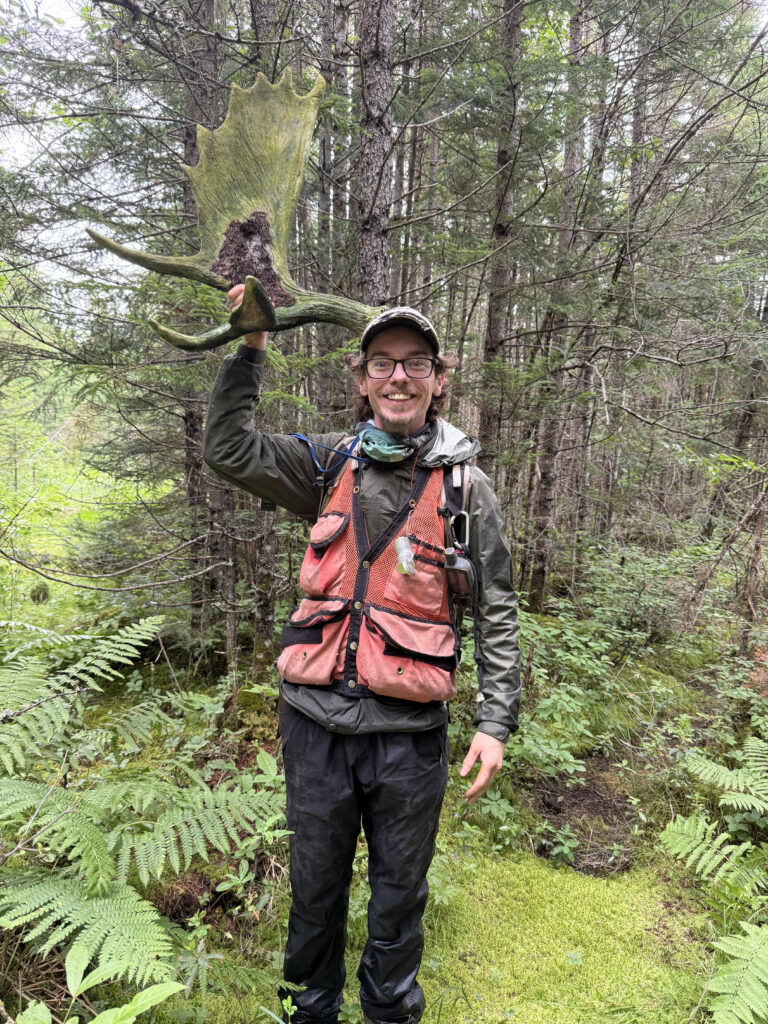
Tyler is a PhD student in the Silviculture & Applied Forest Ecology Lab at the University of Vermont and a Graduate Fellow with NECASC. A wildlife ecologist by training, much of his current work focuses on integrating modern monitoring and quantitative methods with rigorous field-based study to answer applied avian ecology questions, although he also dabbles in mammal research. He received a M.S. in Biology from Indiana University of Pennsylvania and a B.S. in Wildlife Sciences from the SUNY College of Environmental Science & Forestry.