

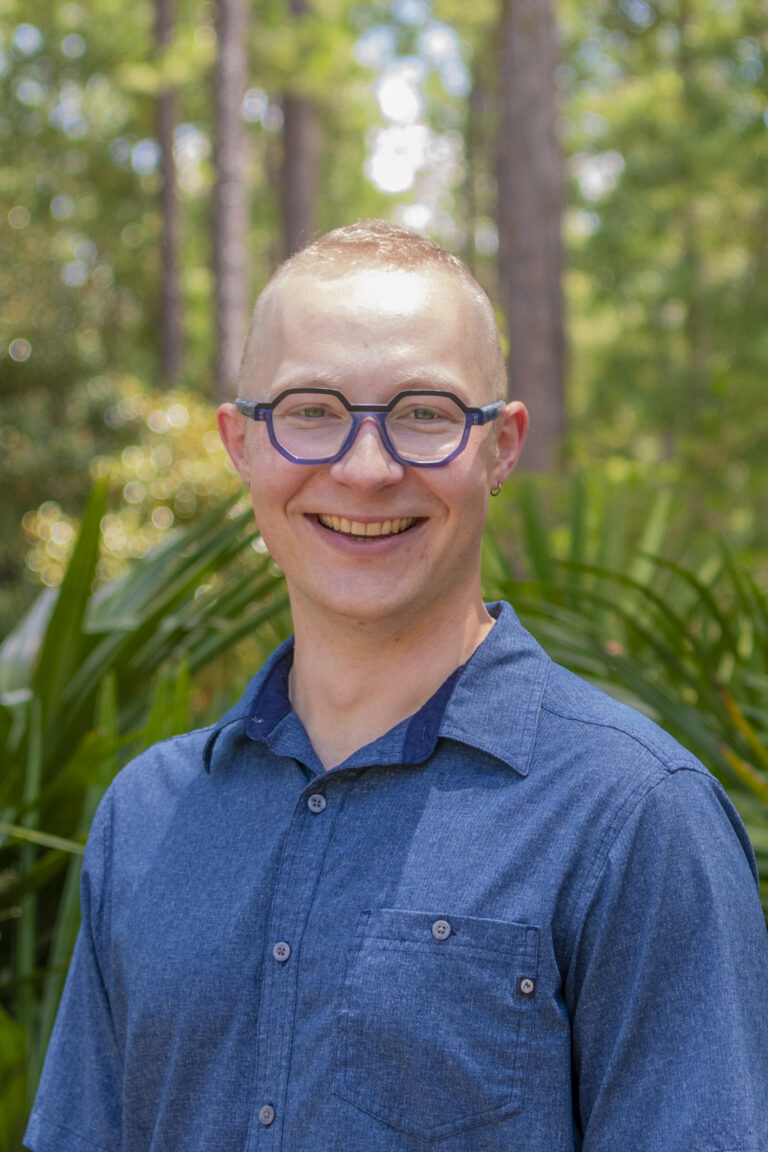

Season 2, Episode 1: Conversation with Dr. Steven Brantley - Regional Watersheds and Southeastern Forests
In this episode, we sit down with Dr. Steven Brantley, an ecohydrological researcher studying interactions between land and water—with a focus on the longleaf pine ecosystems of the Southeastern US. We dive into the science of regional watersheds and forests, alongside the forest management choices shaping the Southeast today.
Season 1, Episode 5: Interview with Courtney Peterson – Exploring Climate Adaptive Management
This episode features an interview with Courtney Peterson, a climate adaptation specialist with NIACS, a research associate in the Forest and Rangeland Stewardship Department at Colorado State University, and the ASCC Network Program Manager. Courtney begins by sharing her experience in the field of natural resource, leading up to her current roles. She then goes on to define adaptive management and provides resources and frameworks—including the RRT and no-action framework used by the ASCC Network—for those wanting to get started with climate adaptive management. Afterwards, Courtney asserts her belief that scientists need to find ways to better tell the story of climate change, and she provides possible pathways for that improvement. Then, Courtney describes how some perceptions about climate adaptive management have shifted over time, especially regarding resistance and transition treatments. Finally, Courtney ends by sharing what keeps her inspired to continue her work and encourages interested listeners to consider getting started on their own climate adaption journey.
Season 1, Episode 4: Interview with Dr. Martha Sample - Climate Change and EAB in the Upper Midwest
This episode features an interview with Dr. Martha Sample, a Climate Adaptation Specialist with the University of Minnesota Department of Forest Resources and the Northern Institute of Applied Climate Science (AKA NIACS). Martha starts by sharing her personal and professional journey in the field of natural resources, culminating with her current project related to northern lowland hardwood forests in the Upper Midwest. She describes these systems and the distinct ways in which climate change and emerald ash-borer are affecting them. Afterwards, Martha expands on the integral the role of managers, practitioners, and stewards in determining adaptation pathways for these forests, and provides some examples of actions already being implemented regionally. In closing, she shares how the idea of positive uncertainty brings her hope, and invites listeners interested or working in northern lowland hardwood forests to reach out via her email included in the show notes.
Season 1, Episode 3: Interview with Dr. Adrienne Keller - understanding and Communicating about Forest Carbon
This episode features an interview with Dr. Adrienne Keller, a terrestrial ecosystem ecologist and soil carbon scientist associated with Michigan Tech University and the Northern Institute of Applied Climate Science (NIACS). In this interview, Adrienne describes her work and interest in above and below ground forest carbon. She starts off by describing the miraculous world of mycorrhizal fungi leading into a discussion about forest soil carbon and carbon cycling. Adrienne also explains how she effectively communicates about forest carbon with managers, and shares insight about the value of place-based knowledge had by on-the-ground practitioners. She ends by mentioning some resources that listeners can use to boost their carbon confidence and competence, which are included in the show notes. Be sure to take a look at those, and the other resources below, and check back in in two weeks for the next episode!
Season 1, Episode 2: Interview with Dr. Jake Courkamp - Why do RAngeland and Weed Management?
This episode features an interview with Dr. Jake Courkamp, who is a rangeland and weed ecology research scientist at Colorado State University. Jake shares about his experience as a researcher in the field of range science, and how his work supports practitioners in facing ecosystem challenges like weed removal. He justifies the need for active management of weeds in rangelands, and explains the importance of having good, “specific” management objectives. He then details the pitfalls and paths for the potential improvement of rangeland management tools, like ecological site descriptions. In parting, Jake shares how some of the ecosystems he’s visited and worked in bring him hope and invites listeners to consider exploring range science professionally. Check out the definitions and resources included below for more information about episode topics; and be sure to look for new episodes every other Monday!
Season 1, Episode 1: Interview with Dr. Linda Nagel - Founding the ASCC Network
For the first episode of this series, we want to introduce who we are and what we do! In this episode I’m joined by Dr. Linda Nagel, who is the co-founder and leader of the Adaptive Silviculture for Climate Change (ASCC) Network. First, we discuss Linda’s connection to silviculture, and how the field relates to climate adaptation. We then chat about the Network’s conceptualization, and the many bright minds involved in its creation. Afterwards, we dive deep into the Network’s purpose and protocols, and end by discussing the Network’s recently published paper: Ten Years of Adaptive Silviculture for Climate Change: An Applied, Co-Produced Experimental Framework. Check out the resources below for help with terminology and more information about the Network, where we work, and what we do; and be sure to look for new episodes every other Monday!