
Sharing Science and Making Connections – My Experience Interning with the Adaptive Silviculture for Climate Change Network
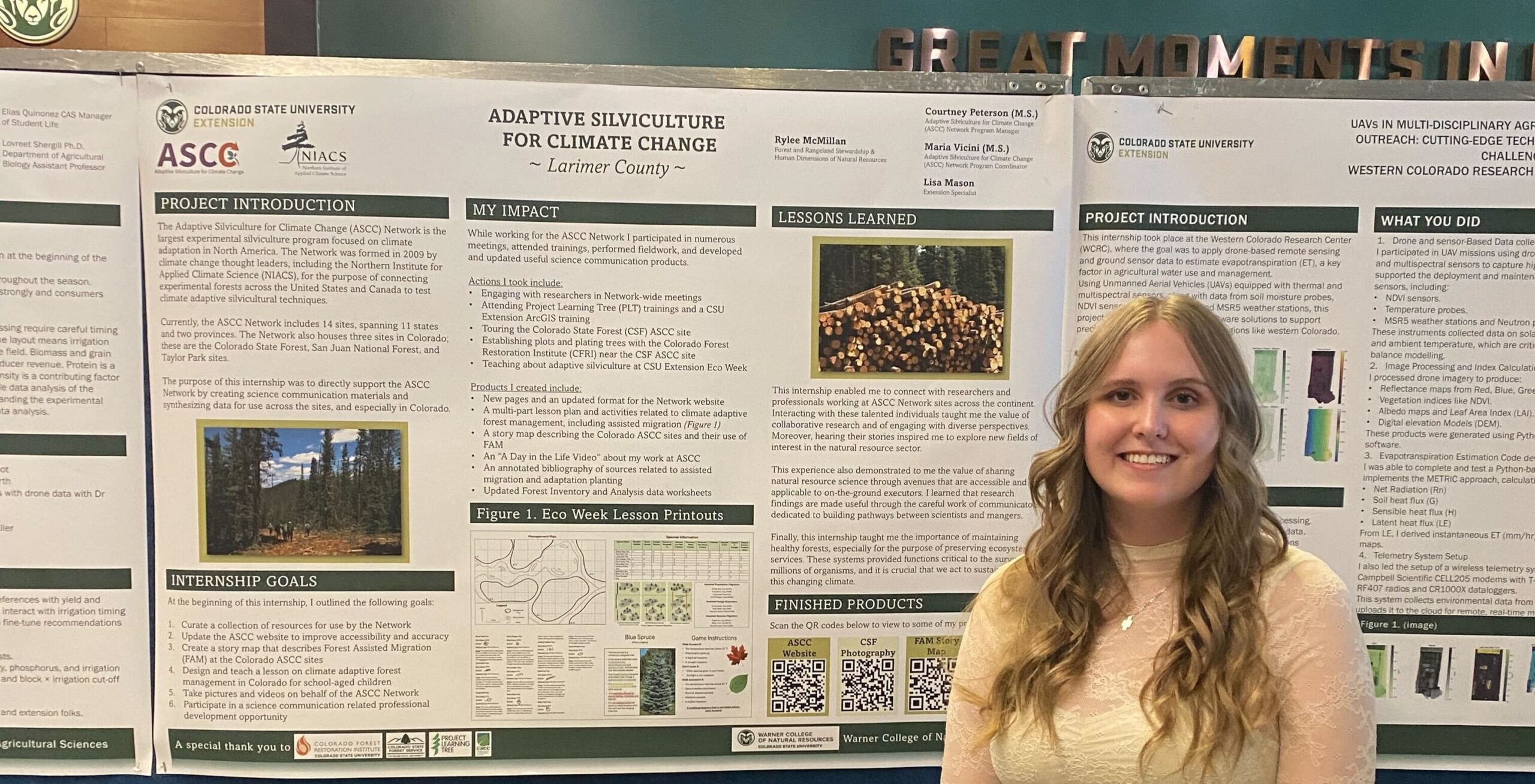
Written by Rylee McMillan, previous ASCC Network intern.
When I was 10, a teacher asked me to draw myself as an adult working my dream job. Back then I wanted to be an explorer, a daring adventurer wandering the globe with my many, many animal friends. So, I drew myself in a pair of khaki shorts and a wide-brim ranger hat, deep in a tropical forest. I still have the drawing (somewhere), and while I don’t usually find myself traipsing around the jungle, I think younger me would be proud of the important forest-centered work I have done in support of the Adaptive Silviculture for Climate Change (ASCC) Network.
My journey with the ASCC Network started in the spring of my senior year at Colorado State University (CSU). At that time, my primary focus was finding and securing a summer job in natural resources. Specifically, I was looking for a position that would give me experience with two main areas—forestry and science communication. My hunt led me to attend an informational session about internships with CSU’s Cooperative Extension. Midway through the meeting, the presenter opened the applications page and one of the first five internships caught my eye instantly: “ASCC Network science communication internship.” On the bus ride home I pulled up the listing, and there it was—my (more realistic) dream job. It offered everything I wanted: a compelling focus, opportunities to network with multi-institutional staff, professional development, self-directed projects, and a flexible schedule. I worked through the application anxiously the next morning, silently manifesting my perfect, employed summer.
I interviewed in late February and received an offer the next week. My excitement was uncontainable as I chatted more with Courtney and Maria V. about the position, and the experiences it would provide. I could already tell that working with the ASCC Network would be critical for my development; and I was eager to start developing! Eventually April rolled around, and along with it, my first day as an intern (yay!). After those first eight hours, my head buzzed with onboarding tasks, team member names, project ideas, and next steps. And despite the information overload I knew one thing for certain: The ASCC Network was where I was meant to be!
Life as an Intern
Working with the ASCC Network led me to refine important skills and make critical connections in the natural resources community. As an intern, I supported the Network’s science delivery efforts through website development, data analysis, photography, fieldwork, and presentations. I was also able to take on projects of personal interest including those involving videography, curriculum development, environmental education, GIS, and ESRI Storymap creation. My involvement in these efforts led me to form valuable relationships with experts and community members, and to gain formative experience in critical areas. Looking back today, three specific opportunities for growth stand out:
1. Co-leading an All-day Extension Eco-explorers Adventure
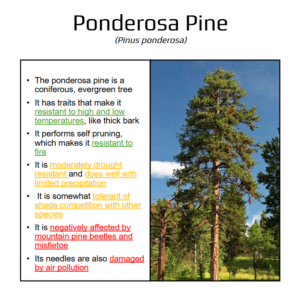
Early on, I made the goal of designing and delivering a forest-centered curriculum as a part of my ASCC internship. In support of this pursuit, Courtney and Maria connected me with folks at Adams County Extension, who host an annual outdoor education program called Eco-expolorers for school-aged children. The Extension staff were interested in my proposal to share a lesson with one of their middle-school groups. After discussion, we settled on the topic Forest Assisted Migration (FAM), and I went to work preparing FAM-related activities and mini-lessons.
I drove up early the day of the event–nervous and excited. After a quick meet up with the Extension staff and students, I provided a short introduction to FAM, l followed up with an activity called Red-leaf Green-leaf (a play on the popular playground game redlight, greenlight). Watching the students learn about forest adaptations by making personal connections with the species was really rewarding, and reinforced my belief around the importance of play in education.
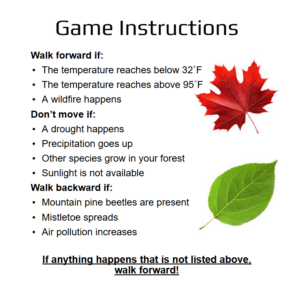
Later on, the team and I drove north to visit a natural area where the students could have some free exploration time. It was fun getting to connect with everyone in this more-open outdoor setting, and address questions the students had about their environment. Following freetime, I taught another short lesson about FAM, and we sat down to do a written puzzle activity. This activity involved critical thinking, and at times it was difficult to keep the student’s attention. Luckily, the team and I were able to improvise and redirect as we went, but the experience definitely taught me the value of backup plans. We ended the day with some reflective nature journaling, and I left the activity feeling inspired by the insightful feedback the students provided.
2. Performing Fieldwork at the Colorado State Forest ASCC Site
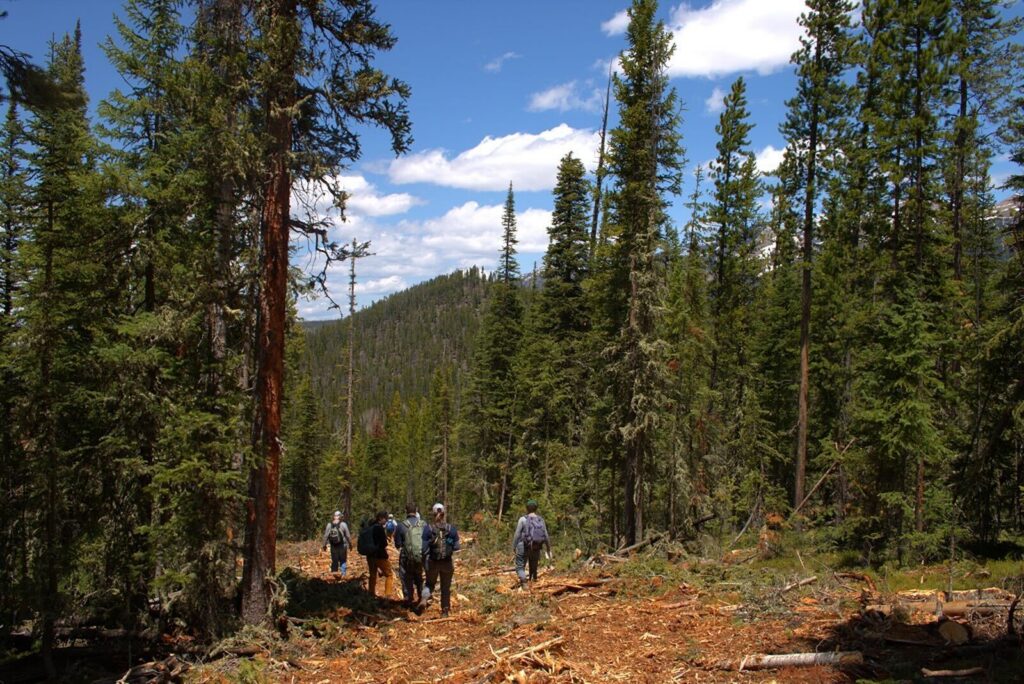
As an intern based in Colorado, I had the opportunity to travel twice to one of the state’s three ASCC sites at the Colorado State Forest (CSF). My goals for the visits were to (1) learn more about ongoing and future ASCC treatments planned for CSF, (2) take site photographs, and (3) connect with professionals and students associated with the ASCC Network and CSF site.
My first trip to the site centered on touring the CSF ASCC transition and resilience treatments, which had been recently harvested. It was incredible to experience and photograph the experiment’s real-world effects, and even more so to learn about the treatments from the experts involved. I especially enjoyed chatting with people about their work, lives, and all other topics of interest as we hiked.
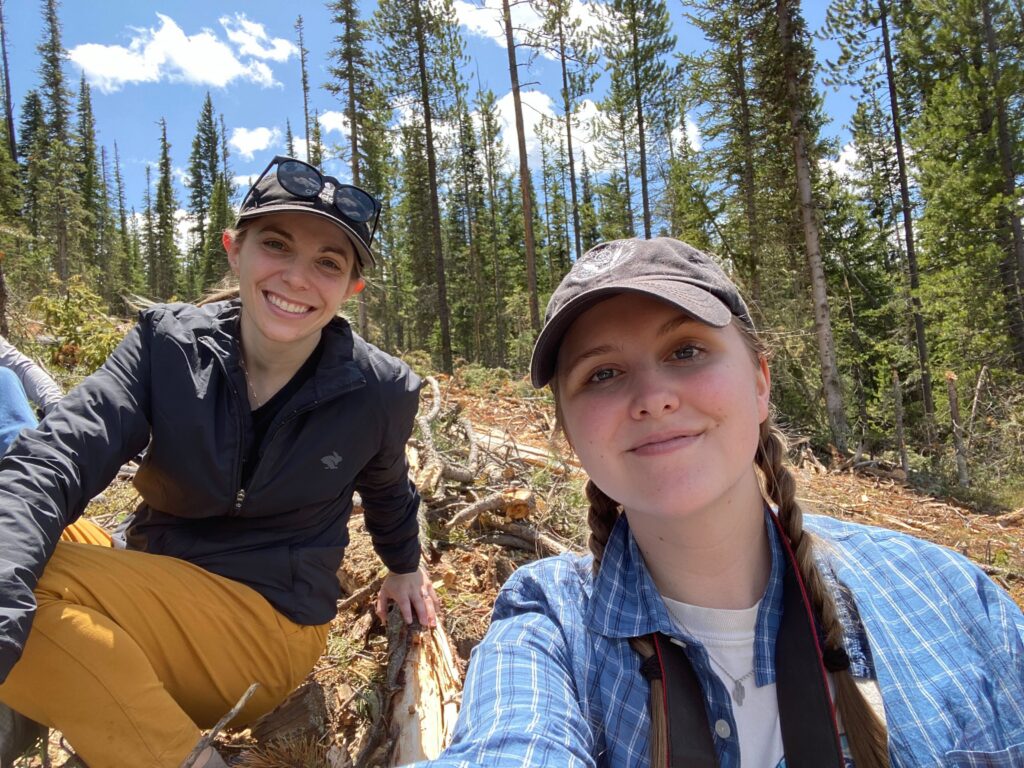
The second visit consisted of a two-day fieldwork excursion in support of a regeneration planting experiment led by the Colorado Forest Restoration Institute (CFRI). On day one, Maria and I worked to locate and establish several possible plots for planting. Later that day the CFRI joined us at the Colorado State Forest Service (CSFS) cabin, where we stayed the night together. On the next day we assisted the CFRI crew in transporting and planting >100 fragile seedlings from a variety of species and genotypes. The hiking, digging, and planting was hard and rewarding work, made bearable through conversation and snacks! I returned home from the trip with a few new bruises and an increased respect for field-based professionals.
3. Attending and Filming a Project Learning Tree Training: Nature’s RX
In an effort to improve my science communication skills during and after my ASCC internship, I elected to take a Project Learning Tree (PLT) course provided by CSFS. The one-day course, Nature’s Rx: Engaging Learners Outdoors for Mental Wellness, was designed to teach environmental educators about the benefits of getting outside, and guide them through PLT activities related to outdoor activity. Before the training, I connected with CSFS staff and received permission to photograph and film the event. As the unofficial photographer, I was able to travel with the CSFS interns and be more involved in set up and break down. This was really valuable since it gave me practice in event coordination and execution.
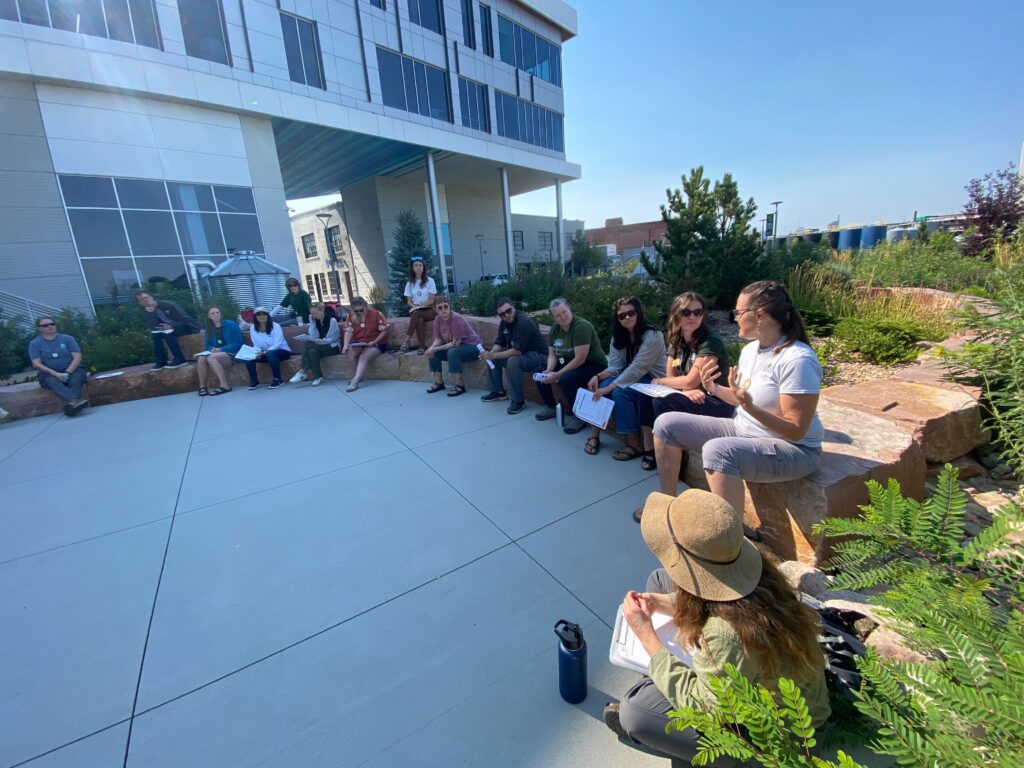
During the training, I learned about nature’s many health benefits, and participated in several fun and engaging activities from the PLT manual. I also had opportunities to network with a diverse collection of environmental professionals, who impressed me with their expertise and willingness to share. I took photos and videos throughout the day and later used that content to create a “day in the life” video for the CSU Warner College of Natural Resources, advertising life as an Extension intern. Capturing the training through photography and videography helped to connect more deeply with the attendees, and cement the lessons learned.
Continuing on as AmeriCorps Service Member
At the end of my Extension internship, the opportunity arose for me to continue on with the ASCC Network as AmeriCorps service member through the CSU RamCorps program. I accepted gladly and began brainstorming new, community-oriented science communication projects aligned with the ASCC mission. My interest in innovative media and resource creation motivated me to explore alternative communication outlets, eventually leading to the conception of a special project: the ASCCing the Experts podcast.
Producing an ASCC Podcast
While working as an ASCC intern, I had the opportunity to learn from many incredible experts; and I often wondered if there was a way to distill the knowledge they shared into a more widely accessible format for general audiences. Exploring this idea led me to podcasting, which drew my interest. Prior to this, I had virtually no experience in audio recording, editing, or mastering, but when the idea struck I knew I needed to try! So, after many weeks of sifting through sound bytes, configuring tech, reaching out to collaborators, and careful planning, the ASCCing the Experts Podcast was born.
The ASCCing the Experts Podcast is an informational, interview-based podcast series about climate adaptation and ecosystem management. During my ASCC service term I was able to produce five episodes centered on a variety of topics ranging from ASCC history to forest soil carbon. Each of these episodes presented unique challenges, but getting to connect with interviewees and audience members made it all worth it. And though the purpose of the podcast is designed to share information with those beyond the ASCC Network, I found producing it to be a great source of personal learning as well.
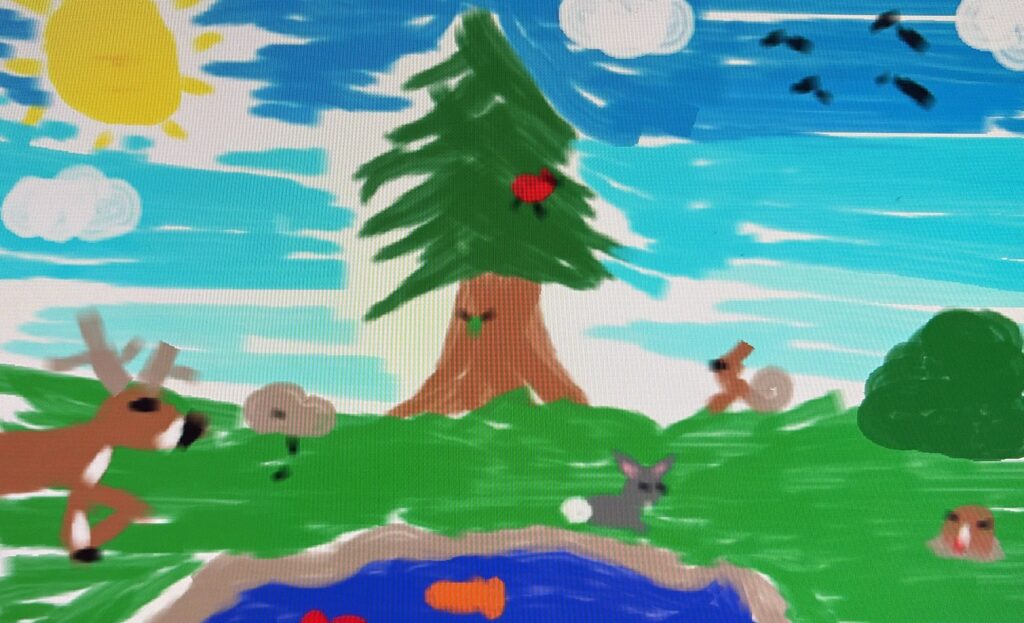
In the end I fell in love with podcasting as a way to share science, and I’m proud of myself for persevering despite the difficulties of learning something new. I encourage folks to listen to ASCCing the Experts podcast on a platform that suits them, and to keep an eye out for any future releases!
Carrying it Forward
Teaching for Extension’s Eco-explorers program, performing fieldwork at the CSF ASCC site, attending the CSFS PLT event, and producing the ASCCing the Experts podcast taught me the value of diligent preparation, service, and relationship building. Moreover, these and other experiences allowed me to connect with those involved in the ASCC Network, and to more deeply understand its mission, goals, achievements, and reach.
Today, I apply the lessons and skills I learned as an intern and service member in my work with the Northern Forests Climate Hub and Northern Institute of Applied Climate Science as a communications fellow. I’m incredibly grateful for the opportunities I’ve had to work with folks in the ASCC Network and to grow from their support and direction. I look forward to seeing how my time with the Network continues to shape how I support the forests and communities around me.
Maybe one day I’ll end up in the woods like my 10-year-old self planned, but for now I’m happy with the work I’ve done with the ASCC Network to get others just as excited about the natural world as I was (and am).
About the author
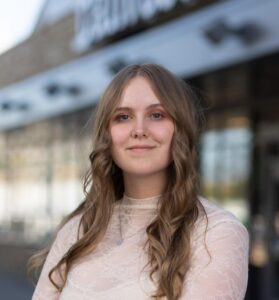
Rylee is an ORISE fellow affiliated with the USDA Northern Forests Climate Hub. Her work primarily supports the preparation of climate change vulnerability assessments for priority ecosystems in the Midwest and Northeast U.S. Previously, Rylee worked with Colorado State University and the Adaptive Silviculture for Climate Change Network, to perform science delivery and science synthesis tasks related to silviculture and climate adaptation topics like forest assisted migration and adaptive management.